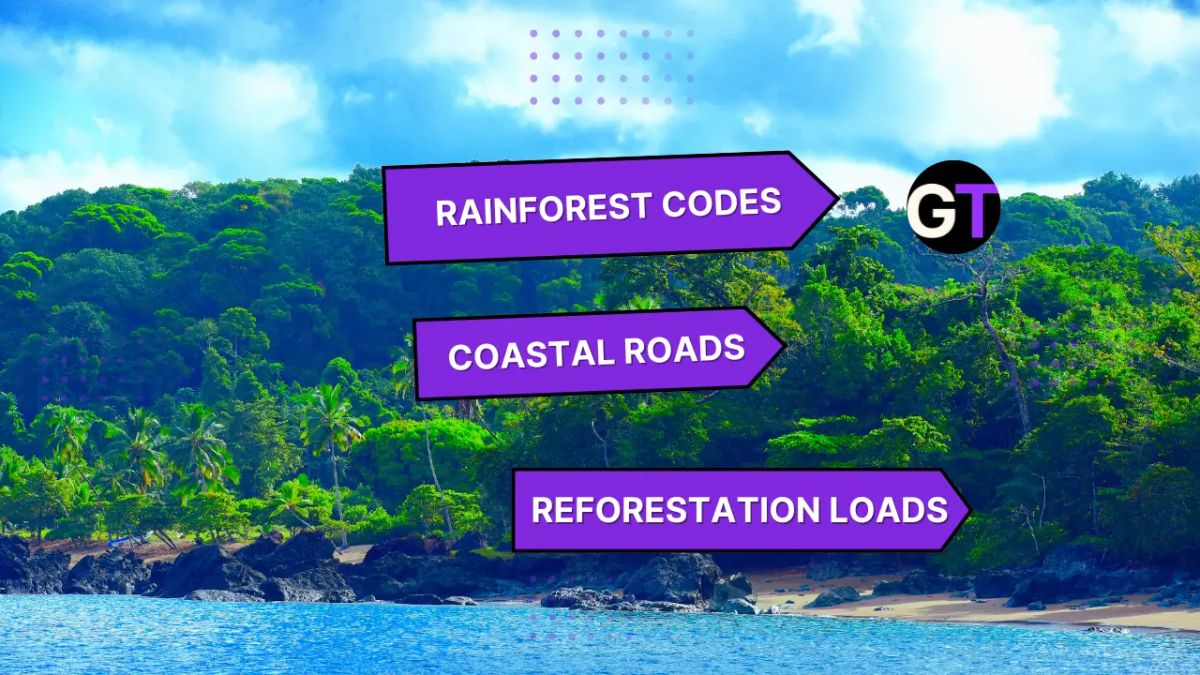
Rainforest Codes, Coastal Roads & Reforestation Loads
From Amazon eDNA to billion-seedling drives and coastal defenses, new ideas are reshaping how we restore and protect ecosystems.
Rain’s Hidden Code: eDNA Reveals Amazon’s Canopy Life
In the Amazon, scientists used low-cost umbrella collectors to capture rainwater washing off the forest canopy—water laced with environmental DNA. The samples revealed hundreds of plant, insect, bird, mammal, and amphibian taxa, with old-growth forests showing up to 1.9× more diversity than nearby plantations. Collected over 8–20 days, the eDNA snapshots offer a hyperlocal, noninvasive, and cost-effective way to track elusive canopy biodiversity and detect disturbance, potentially transforming tropical forest monitoring.
💬 Could rain-caught DNA become conservation’s cheapest, most revealing canopy spy?
👉👉 Read more in Science Advances
Scaling Coastal Resilience from Europe to the Global South
Coastal restoration—think mangrove reforestation, wetland revival, and hybrid green-grey infrastructure—is emerging as a frontline defense against climate-driven storms, floods, and erosion. Drawing lessons from the EU’s RestCoast project, the Global Center on Adaptation shows how these strategies can leap from European pilots to high-risk, resource-constrained coasts in Africa and Asia. From Cabo Verde’s budget-backed restoration plans to Bangladesh’s 22-town blueprint blending local knowledge with cost-effective engineering, the message is clear: scaling isn’t copy-paste—it’s adaptation, ownership, and sustainable finance.
💬 Can coastal nations turn ambitious restoration plans into protection before the next big storm hits?
👉👉 Read more via RestCoast
Over 6.8B Seedlings Needed to Restore Just 15% of Canada’s Burned Forests
After three record-breaking wildfire seasons, Canada faces an unprecedented reforestation crisis: restoring just 15% of forests lost since 2023 will require more than 6.8 billion seedlings. The Canadian Tree Nursery Association (CTNA-ACPF) warns that provincial funding cuts and slow government action are undermining recovery, with BC’s planting numbers already in steep decline. The group is calling for a national forest restoration task force, expanded tree-planting targets beyond the 2 Billion Tree Program, and urgent long-term investment in nursery capacity, labour, and climate-resilient planting strategies. Without immediate action, they warn, Canada risks losing not only critical forests but also the rural jobs and ecosystems they sustain.
💬 Can Canada plant its way out of a wildfire legacy before it’s too late?
👉👉 Read more via CTNA-ACPF
B.C. Tree Planting Slumps as Wildfires Outpace Reforestation
For the third year in a row, B.C.’s tree planting numbers are falling—dropping from 281 million seedlings in 2024 to an expected 238 million this year, with projections of just 226 million in 2026. That’s 135 million short of the provincial government’s election promise, even as wildfires have wiped out more than 46,500 km² of forest since 2023. Industry experts warn that replanting isn’t keeping pace with destruction, citing gaps in funding, seedling supply, and post-fire recovery planning. The Canadian Tree Nursery Association says restoring even 15% of B.C.’s burned forests will require over a billion extra seedlings—four times current planting levels—and is pushing for a national restoration task force, expanded 2 Billion Tree Program, and stable long-term investment in nurseries. Without urgent action, they caution, the province risks a widening gap between what burns and what grows back.
💬 Can B.C. close its reforestation gap before the wildfire legacy becomes permanent?
👉👉 Read more via BIV
Burying Burnt Trees: A Post-Fire Climate Fix That Pays for Itself
When wildfires leave behind charred hillsides and no chance of natural regrowth, land managers usually face three bad options: spend millions replanting, sell for pennies, or do nothing. Grant Canary of Mast Reforestation says there’s a fourth path—bury the fire-killed trees, then reforest. This “biomass burial” locks carbon underground for 1,000+ years, prevents future fires by removing fuel, and generates high-quality carbon credits that can fund large-scale restoration. It’s a practical, on-site solution for even the most remote burn scars—cheaper than hauling biomass for energy or biochar, and far cleaner than piling and burning. With registries like Puro and Isometric onboard, these credits tick all the boxes for climate-conscious buyers: durable, additional, and immediately retireable. Done right, it’s not just a win for the planet—it’s a revenue stream that helps forests, communities, and carbon markets grow back stronger.
💬 Can burying yesterday’s forests help pay for tomorrow’s?
👉👉 Read more via Carbon Herald
Southern Europe’s Wildfire Truce: Calmer Winds, Fierce Battles Ahead
From Patras to Madrid to the hills of northern Portugal, firefighters finally caught a break Thursday as calmer winds let water-bombing aircraft pound stubborn wildfire zones instead of chasing new fronts. But with triple-digit heat and bone-dry landscapes still primed to ignite, officials warn the respite could be short-lived. Spain mourns its third fire-related death this week—a 37-year-old volunteer firefighter—while thousands remain evacuated. In Greece, a major blaze near Patras was stopped at the urban edge, and arrests point to suspected arson. The EU’s civil protection agency has already matched last year’s total wildfire deployments—16 and counting—sending planes and helicopters across borders to hotspots from Albania to Morocco. It’s a rare win in a season where “catastrophic” is becoming the default setting.
💬 Can Europe keep its firefighting momentum—or will the next heat wave reset the clock?
👉👉 Read more via Associated Press
From Carbon Bootcamps to Forest Funding Gaps: This Week in Climate Cashflow
From Plan Vivo’s carbon-project “training camp” to a bank-backed Amazon deal, a new forest credit standard, and Liberia’s grassroots climate push, this week’s climate finance news is all about who’s holding the purse strings—and whether they’re tightening or loosening. Africa’s green finance dreams face big hurdles, youth ecopreneurs are pitching for restoration cash, and U.S. forest conservation programs are bracing for budget cuts. Meanwhile, some conservationists say the fix is simple: give local groups more freedom—and fewer hoops—to protect nature.
💬 Can climate finance get faster, fairer, and actually land where it’s needed most?
👉👉 Read more our weekly column in Ground Truth
The Hidden Costs of Southeast Asia’s “Green Comeback”
Sure, Thailand, Vietnam, Laos, Malaysia, and the Philippines have all pulled off the ultimate PR glow-up—flipping from deforestation hot zones to net forest gains since the ’90s. But here’s the plot twist: a lot of that “forest” is actually endless rows of rubber, eucalyptus, and acacia—industrial tree farms that suck up fossil fuels, bulldoze biodiversity, and push out traditional shifting cultivation (aka the sustainable land-use methods practiced by ethnic minority groups for generations). Programs like REDD+ love the satellite-friendly optics, but when monocultures replace multifunctional landscapes, the climate benefits get sketchy and the local benefits evaporate. It’s a rebrand that looks great from space, but up close? Less rainforest revival, more corporate green grab.
💬 Is Southeast Asia’s forest revival a climate solution—or just climate cosplay?
👉👉 Read more via ScienceDirect
Buckeye State Tree Nursery Sprouts a Forest-Filled Future for Ohio
In Zanesville, the newly minted Buckeye State Tree Nursery is already popping with green—over 500,000 seeds planted last year are now breaking through the soil, setting the stage for a major boost to Ohio’s forests. By spring 2026, ODNR expects to distribute about 80% of these seedlings—ranging from buckeye and black walnut to American chestnut and persimmon—for conservation projects across the state, with the rest maturing until 2027. The nursery’s mission is more than just reforestation—it’s about climate-ready native species, better habitat, and a living legacy for future generations. And yes, plans are in the works for an online seedling shop so the public can get in on the action. For now, think of it as Ohio’s green vault, growing tomorrow’s forests one sprout at a time.
💬 Can Ohio’s homegrown seedlings be the root of a more resilient future?
👉👉 Read more via Hometown Stations
From Beetles to Balance: What Slave Lake Wants from Its Forests
Carleton University researchers have been making the rounds in Slave Lake, B.C.’s Quesnel, and Meadow Lake, Sask., asking locals what “forest resilience” should actually look like. Surprise, surprise—priorities shift depending on who you ask: conservationists push biodiversity and habitat, industry folks lean on economic stability, and pretty much everyone agrees on mixed-species planting and keeping sensitive areas off-limits. Genetically modified tree seeds? Hard pass. Born from concerns over the eastward creep of the mountain pine beetle (a threat that’s eased but not disappeared), the study underscores the power of stakeholder input in shaping forest policy. The next phase will pit these local values against real-world management plans to see where they align—and where they splinter. Because if we’re going to plan the forests of the future, we might as well make sure everyone likes the view.
💬 Can forest policy actually reflect both local values and long-term resilience—or is compromise the real endangered species?
👉👉 Read more via The Lakeside Leader
Mapping the Human–Forest Dance Over 45 Years
From 1975 to 2020, researchers tracked how close (or far) humans live from forests using three metrics—forest area per person, forest-proximate people, and a new “Forest Human Nexus” score that blends proximity, population density, and forest cover. The results reveal a global patchwork: Europe’s populations are sidling closer to trees thanks to reforestation and green-minded urban planning, while swaths of Southeast Asia, Africa, and South America are drifting away due to deforestation, plantation expansion, and urban growth far from forest edges. The study warns that shrinking proximity can mean reduced ecosystem services for people—and fewer conservation incentives—while also noting that not all “forest gains” are equal (monoculture plantations, anyone?). The Forest Human Nexus offers a tool for policymakers to pinpoint where reconnection is needed, ideally before our collective forest relationships turn long-distance for good.
💬 Are we moving closer to our forests—or ghosting them?
👉👉 Read more in Nature Communications Earth & Environment
Replanting After Wildfire: Why “Just Add Trees” Doesn’t Cut It
Post-wildfire reforestation isn’t a Disney montage of happy tree-planters and instant shade. It’s a five-to-eight-year slog involving seed shortages, ecological triage, soil science, and climate curveballs—from droughts and heat domes to bugs and burnt soil that repels water like a bad ex. In Canada’s Ogoki Forest, crews are just now planting 700,000 seedlings two years after fires torched vital caribou habitat. Elsewhere, First Nations groups are testing pressure-washer planting to beat the heat, while scientists eye drone-dropped, nutrient-coated seeds to skip costly nursery stages. The goal isn’t simply replacing lost trees—it’s building fire-resilient, biodiverse landscapes that may look nothing like the forests that burned.
💬 If tomorrow’s forests won’t look like yesterday’s, what should we grow in their place?
👉👉 Read more via CBC News


Edited by Chris Harris

This work is licensed under a
Creative Commons Attribution 4.0 International License.